
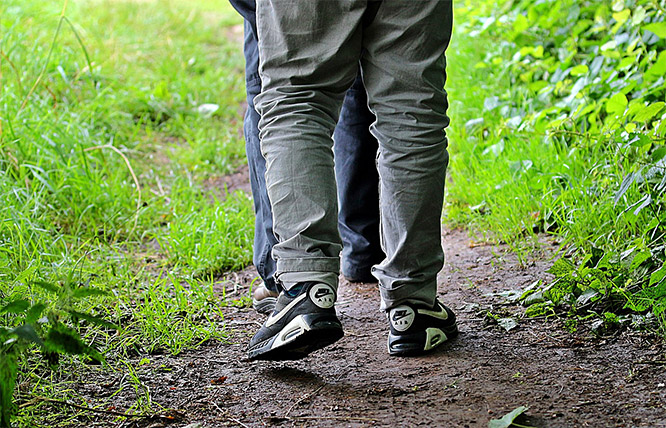
A 2026 study in JAMA Internal Medicine tracked 2,110 adults and found that people walking 8,000 or more steps daily had a 51% lower risk of all-cause mortality compared to those logging 4,000 steps. Not a marginal difference. A 51% reduction. That signal was strong enough that public health agencies updated their exercise guidelines based partly on this data.
The case for walking is unusually well-documented across decades of large cohort studies, randomized trials, and meta-analyses. What those studies actually show — and where people consistently misread them — is worth understanding before you assume you already know the answer.
How Walking Reshapes Your Heart and Blood Vessels
The heart is a muscle. Apply load consistently, and it adapts. Walk at a brisk pace and your heart rate climbs to 50–70% of your maximum — the aerobic zone where cardiovascular adaptation happens fastest without the joint stress that comes with running or high-intensity training.
The American Heart Association’s position is direct: 150 minutes of moderate-intensity walking per week reduces cardiovascular disease risk by approximately 35%. That’s 30 minutes, five days. Not 60 minutes, not 90. Thirty minutes.
Blood pressure responds on a similar timeline. A 2013 meta-analysis in Hypertension Research found that sustained walking programs lowered systolic blood pressure by an average of 4.11 mmHg — clinically comparable to low-dose antihypertensive medication for Stage 1 hypertension. That comparison isn’t rhetorical. It’s what the data shows.
The mechanism: walking increases nitric oxide production in blood vessel walls, which improves arterial elasticity and endothelial function. Over weeks of consistent effort, it also reduces resting heart rate, meaning your cardiovascular system runs more efficiently at baseline without the same workload.
What Brisk Pace Actually Means in Measurable Terms
3.0 mph is a leisurely stroll, below the aerobic threshold for most adults. 3.5–4.0 mph is brisk walking — the range where cardiovascular benefits accumulate. A practical field test: you should be able to hold a conversation but not comfortably sing. Heart rate should land at 50–70% of your estimated maximum (220 minus your age). A 45-year-old targets 88–122 bpm during a productive walk.
If you want real-time data without guessing, the Garmin Forerunner 265 ($449) and Apple Watch Series 9 ($399) both track pace and heart rate with accuracy sufficient for pacing decisions. They’re not FDA-cleared medical devices, but the margin of error is small enough for this application.
The Timeline for Cardiovascular Improvement
Impatience ends most walking programs before the adaptation kicks in. Based on exercise physiology research, realistic timelines look like this:
- Blood pressure reduction: 4–12 weeks of consistent walking
- Resting heart rate decrease: 6–8 weeks
- VO2 max improvement (aerobic capacity): 8–12 weeks
- HDL cholesterol increase: 10–12 weeks
These are population averages. Individual results vary by age, baseline fitness level, walking intensity, and pre-existing cardiovascular health. Someone starting from a completely sedentary baseline typically sees faster initial gains than someone who already exercises occasionally.
Blood Lipids: What Changes and What Doesn’t
Walking raises HDL cholesterol — the protective lipoprotein — by 3–5% after 12 weeks of consistent effort. It doesn’t dramatically lower LDL in most studies. What it does is shift LDL particle size toward larger, less atherogenic particles, a distinction that matters more in cardiovascular risk assessment than raw LDL numbers. That’s a meaningful change, but diet still does most of the work on LDL reduction. Don’t expect walking alone to fix a cholesterol panel that diet and genetics have pushed out of range.
Walking’s Effect on Mental Health: The Numbers People Skip Over
Walking is more effective for mental health than most casual conversation about exercise would suggest. The evidence here is unusually consistent across different study designs, populations, and geographies.
A Harvard Medical School analysis found that walking 30 minutes daily, five days per week, reduces depression symptoms by 26%. Not “may improve mood.” Twenty-six percent. That’s in the efficacy range of some SSRIs for mild-to-moderate depression — with no side effects, no cost, and no prescription required.
Walking outdoors amplifies the effect. A Stanford study found that 90 minutes of walking in natural settings reduced activity in the subgenual prefrontal cortex, the brain region most associated with rumination — the repetitive negative thinking closely linked to depression. Urban walks on busy streets didn’t produce the same reduction. If you have access to parks, trails, or green space, choosing them over pavement when possible is a decision the evidence supports.
How Walking Reduces Anxiety — The Mechanism
When stress accumulates, cortisol and adrenaline build up in your bloodstream. Walking activates your sympathetic nervous system just enough to metabolize those stress hormones without amplifying the stress response further. It simultaneously increases serotonin and norepinephrine synthesis in the brain. Twenty minutes of moderate walking measurably reduces state anxiety on standardized psychological instruments — researchers confirm this using the State-Trait Anxiety Inventory administered before and after sessions.
The effect appears within a single session. Not after weeks of training. One walk produces a measurable shift. That immediacy is clinically relevant and practically useful on high-stress days.
What Walking Does to Brain Volume Over Time
A landmark 2011 study published in PNAS (Erickson et al.) measured hippocampal volume in older adults who walked 40 minutes three times weekly for one year. Result: hippocampal volume increased by 2% in the walking group. The hippocampus governs memory formation and spatial navigation, and it normally shrinks 1–2% per year after age 50. This randomized controlled trial reversed that trajectory.
No supplement currently marketed for cognitive health has evidence at this level of rigor. The comparison is not close.
How Many Steps You Actually Need — Separating Marketing from Research
The 10,000-step target originated from a 1960s Japanese marketing campaign for the Manpo-Kei pedometer. Not a clinical recommendation. Not a randomized trial. A consumer product marketing campaign. The actual evidence is more specific, more nuanced, and more useful:
- 4,000 steps/day is the floor — below this threshold, major cohort studies show no measurable all-cause mortality benefit
- 7,000–8,000 steps/day is where mortality risk plateaus for adults under 60 (JAMA Internal Medicine, 2026) — more steps beyond this yield diminishing returns on longevity
- 6,000–8,000 steps/day appears to be the more evidence-based target for adults over 60, where the risk reduction curve flattens earlier
- Cadence matters as much as count — steps taken at more than 100 steps per minute carry measurably greater cardiovascular benefit than the same number of steps taken at a slow amble
- Post-meal walking (10–15 minutes immediately after eating) reduces blood glucose spikes by an average of 12%, clinically relevant for anyone managing insulin sensitivity or blood sugar
- Two 15-minute walks deliver equivalent cardiovascular benefit to one 30-minute walk, per research published in Heart (2001) — this removes the barrier of needing one uninterrupted block in your day
Tracking Tools Worth Using
The Fitbit Charge 6 ($160) tracks step count and walking cadence accurately with a 7-day battery life. The Garmin Vivosmart 5 ($130) is lighter and comparably accurate for basic monitoring. If you’d rather spend nothing, the Apple Health app records steps passively via your iPhone’s built-in accelerometer — accuracy depends on consistently carrying your phone, which most people already do.
The Oura Ring Gen 3 ($299 plus $6/month subscription) adds recovery scoring and readiness data on top of your activity tracking. It’s worth the additional cost if you’re also managing sleep, chronic stress, or training volume alongside your daily walks — it gives you a picture of whether your walking load is complementing or competing with recovery.
Walking vs. Running vs. Cycling: A Direct Comparison
The assumption that running is simply better than walking doesn’t survive contact with the full dataset. What you’re optimizing for changes the answer entirely.
| Metric | Walking | Running | Cycling |
|---|---|---|---|
| Cardiovascular benefit per hour | Moderate | High | High |
| Joint impact force | 1× body weight | 3–4× body weight | Very low (non-impact) |
| Calories burned per hour | 240–340 kcal | 480–650 kcal | 400–600 kcal |
| Annual injury rate | Under 10% | ~79% (Stanford, 2009) | 30–40% |
| Bone density benefit | Yes (weight-bearing) | Yes (weight-bearing) | No (non-weight-bearing) |
| Mental health benefit | Strong | Strong | Moderate |
| Startup cost | ~$140 (shoes only) | ~$140 (shoes only) | $500–$2,000+ |
| Long-term adherence rate | High | Moderate (injury attrition) | Moderate |
Walking isn’t the most efficient exercise for any single metric in that table. But it’s the only option where injury risk stays below 10% annually, startup cost is minimal, bone density benefits are preserved (unlike cycling), and long-term adherence reliably remains high. The most effective exercise protocol is the one you sustain consistently for years — not the one with the highest calorie burn per session on paper. Running’s 79% annual injury rate is the number that changes the calculation for most people comparing the two.
Three Walking Mistakes That Cancel Out the Benefits
Walking too slowly to trigger cardiovascular adaptation. Under 2.5 mph keeps most adults below the aerobic threshold. Heart rate stays too low, and the cardiovascular stimulus is minimal — the equivalent of doing a low-effort warmup as your entire workout. Track your pace using Google Fit or Apple Fitness (both free) and aim for 3.5–4.0 mph consistently. Pace, not just duration, determines whether the cardiovascular signal is strong enough to produce adaptation.
Ignoring footwear until something hurts. Plantar fasciitis, medial knee pain, and shin splints are the three most common walking injuries — and all are disproportionately linked to inadequate or worn-down shoes. The Brooks Ghost 16 ($140) and Hoka Bondi 8 ($165) are consistently rated for long-distance walking support and cushioning, and neither requires a break-in period. Shoes should be replaced every 400–500 miles of use. Footwear failure is the single most avoidable reason structured walking programs collapse.
Treating total daily step count as the only variable that matters. Researchers at Maastricht University found that breaking up prolonged sitting with 2-minute walking breaks every 30 minutes substantially improved blood glucose regulation and triglyceride levels — independently of total daily step count. Logging 8,000 steps before 10am and then sitting for 9 continuous hours still produces measurable metabolic deterioration. How often you move throughout the day matters alongside how much you move in total.
When Walking Alone Won’t Move the Needle
Walking is a powerful, evidence-backed tool. For some populations, it’s not a sufficient standalone intervention.
For people with a BMI above 35, poorly controlled Type 2 diabetes, or established cardiovascular disease — defined as prior heart attack, stroke, or diagnosed coronary artery disease — walking is a valuable component of a treatment plan, not a replacement for one. In these populations, walking without simultaneously addressing diet, medication adherence, or medical supervision typically produces sub-clinical results. The cohort studies showing dramatic cardiovascular benefits from walking largely enroll adults who are sedentary but otherwise metabolically healthy. That’s a different starting point.
Don’t use walking as a reason to defer other necessary interventions. Get baseline bloodwork done. Know your fasting glucose, blood pressure, and lipid numbers before assuming that adding steps is the primary lever available to you. Walking fits into a broader health strategy. It doesn’t replace the parts of that strategy it can’t reach.
Individual responses also vary in ways population averages don’t capture. A 58-year-old with well-controlled blood pressure and no cardiovascular history will likely see results close to the published averages. A 55-year-old with three cardiovascular risk factors, elevated HbA1c, and a decade of sedentary behavior is working with different baseline conditions. Treat the data as directional guidance, get your specific numbers measured, and calibrate expectations from there.
Medical Disclaimer: This content is for informational purposes only and does not constitute medical advice. Always consult a qualified healthcare professional before making health-related decisions.