
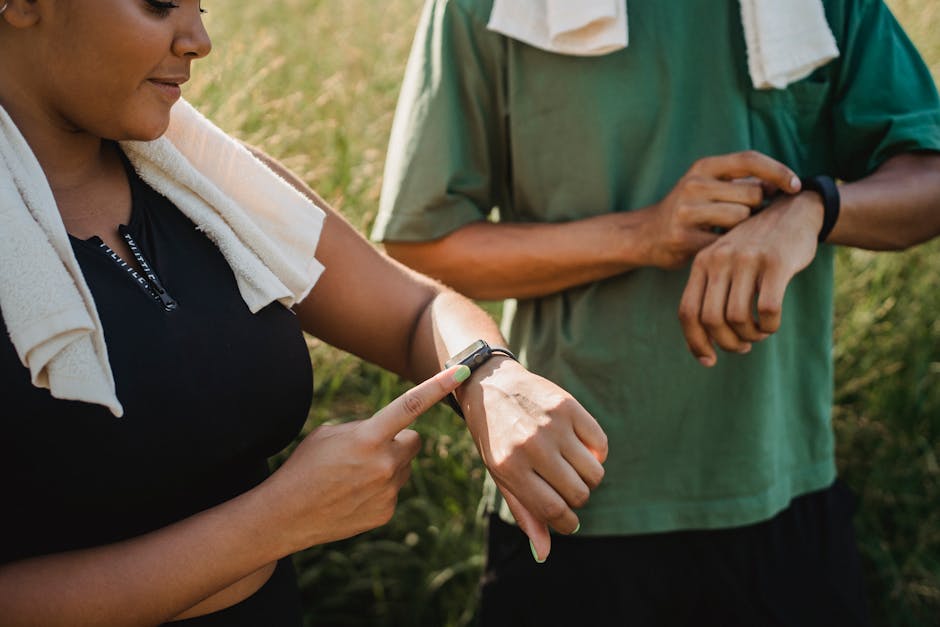
I spent $180 on a piece of matte black plastic that told me I was “optimally recovered” while I was literally hunched over a toilet at my sister’s engagement party. I had a massive hangover. My head was throbbing, my skin was clammy, and my stomach was doing backflips, but according to the Energyport fitness tracker, I was ready to run a marathon. That was the moment I realized most of these gadgets are just expensive mood rings for adults.
The hardware is… fine, I guess
It’s light. I’ll give it that. It weighs exactly 22 grams with the silicone strap, which is basically nothing. You forget it’s there, which is a blessing because it’s not exactly a fashion statement. It looks like a pebble someone glued to a piece of rubber. I’ve worn it for 32 days straight now, and the strap is already starting to get that weird shiny look that cheap silicone gets when it rubs against your sleeve too much.
The screen is a problem. They call it an “OLED High-Contrast Display,” but in reality, it’s about as bright as a candle in a coal mine. If you’re outside in the actual sun, you have to cup your hand over it like you’re trying to light a cigarette in a windstorm just to see if you’ve hit your step goal. It’s annoying. Truly.
The vibration motor feels like a caffeinated wasp trapped against your pulse. It’s not a gentle nudge; it’s a jarring, mechanical buzz that makes me jump every time I get a text.
The data is mostly a guess

I tested this against a Polar H10 chest strap because I’m the kind of person who needs to know if I’m being lied to. During a steady-state run, the Energyport was close enough—maybe 3 or 4 beats off. But the second I started doing hill sprints? Total collapse. The Polar showed me at 172 BPM, while the Energyport was hovering at 144, probably wondering if I was just taking a brisk walk to the fridge. It took nearly two minutes for the tracker to catch up to my actual heart rate. If you do HIIT, this thing is useless.
What I mean is—actually, let me put it differently. It’s not just slow; it’s fundamentally incapable of tracking rapid changes. I might be wrong about this, but I suspect the sensor isn’t actually reading my blood flow as much as it’s just guessing based on my movement. I know people will disagree and point to the “white papers” on the Energyport website, but my sweaty wrists don’t lie.
And don’t get me started on the sleep tracking. I hate sleep tracking. I think looking at a score that says you slept poorly actually makes you feel more tired than if you just woke up and got on with your day. One night I stayed up until 3 AM reading a thriller, and the Energyport told me I got four hours of “Deep Sleep.” I was awake. I was literally turning pages. It’s a lie.
The part that actually made me angry
The Energyport app has this feature called “Vibe Sync.” It’s supposed to tell you when your energy is highest so you can schedule your most important work. This is where I go on a bit of a rant. We are becoming obsessed with letting algorithms tell us how we feel. I don’t need a $180 bracelet to tell me that I’m tired at 3 PM after eating a massive bowl of pasta. I have eyes. I have a brain.
Anyway, the app is also just poorly designed. It takes forever to sync. I’ve spent cumulative hours of my life staring at a little spinning circle while my phone tries to talk to my wrist. I used to think the Whoop app was bad because of the subscription model—which, by the way, is a total scam and I refuse to pay $30 a month for the privilege of seeing my own heart rate—but at least their app works. Energyport’s app feels like it was coded by three interns in a basement who were being paid in pizza crusts.
I’ve bought the same pair of $12 Nike running socks six times because they work. I don’t care if they aren’t “smart.” I want things that do what they say they’re going to do. The Energyport doesn’t.
The verdict
I’m going to keep wearing it for another week just because I paid for it, but after that, it’s going in the drawer with the old iPod Nanos and the tangled micro-USB cables.
- Battery life: Claimed 7 days, actually 4.2.
- Accuracy: Fine for walking, garbage for anything intense.
- Comfort: 9/10, forgot it was there until it buzzed and scared me.
- App: A disaster.
I honestly think most people who wear these things are just looking for an excuse to talk about their “recovery” at brunch. It’s a status symbol for people who work in offices and want to feel like athletes. I’m guilty of it too. I wanted to be the guy with the data. But the data is messy and the hardware is mediocre.
I actively tell my friends to avoid this one. Buy a cheap Casio and go for a run until you’re tired. That’s a better fitness plan than anything this app will give you.
Is it possible I just have a defective unit? Maybe. But I doubt it. I think we’ve just reached a point where we’re making gadgets for the sake of making gadgets, and we’ve forgotten that a tracker is only as good as the person actually doing the work.
Do you actually feel better since you started tracking every heartbeat, or are you just more anxious? I don’t know the answer, but I know I’m tired of the spinning sync circle.
Save your money.