The surprising fact for most beginners: two well-built strength sessions can train every major muscle group each week. You do not need a six-day split, a crowded gym, or a shelf full of supplements. You need repeatable exercises, sensible loads, and enough rest to improve.
This May plan uses two full-body sessions. Train on Monday and Thursday, Tuesday and Friday, or any schedule that leaves at least one rest day between workouts. Each session takes about 45 minutes. The goal is simple: learn the main movement patterns, add a small amount of weight or repetition over time, and finish each workout feeling challenged rather than wrecked.
What should two beginner strength sessions include?
A useful two-day plan must cover the basic ways your body moves. That means a squat for the legs, a hinge for the hips, a push for the chest and shoulders, a pull for the back, and a loaded carry or core exercise for bracing. These patterns give you more value than a random collection of single-muscle exercises.
| Movement pattern | Beginner exercise | Main muscles | Starting dose |
|---|---|---|---|
| Squat | Goblet squat | Quadriceps, glutes | 3 sets of 8-10 |
| Hinge | Dumbbell Romanian deadlift | Hamstrings, glutes, back | 3 sets of 8-10 |
| Horizontal push | Incline push-up | Chest, shoulders, triceps | 3 sets of 6-12 |
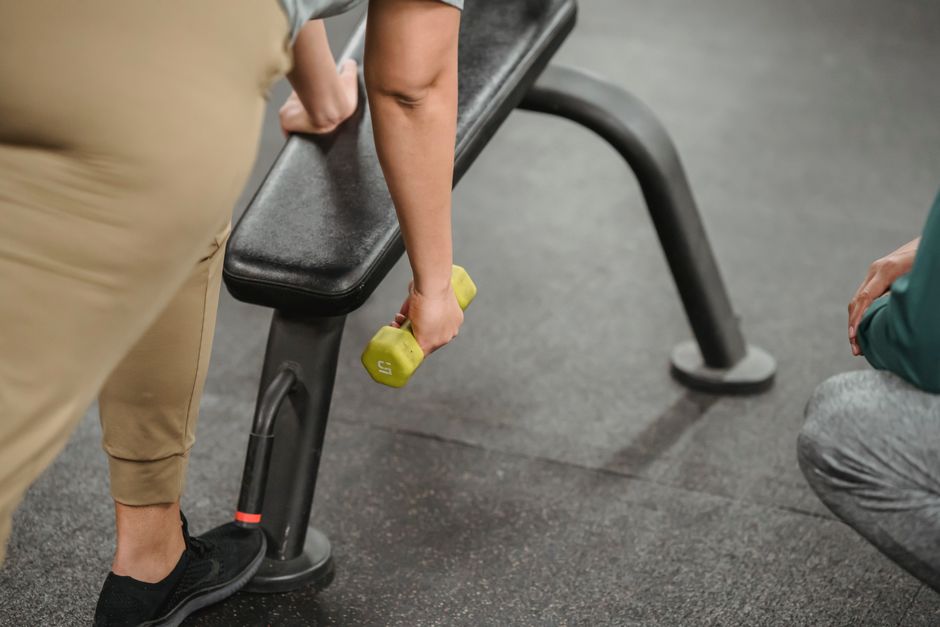
| Horizontal pull | One-arm dumbbell row | Upper back, biceps | 3 sets of 8-12 each side |
| Core brace | Dead bug | Abdominals, hip control | 2 sets of 6-10 each side |
The verdict: build both sessions around these five patterns. You will improve strength, balance, and confidence faster than you would by chasing novelty. Start with two or three work sets per exercise, leave two good repetitions in reserve, and rest 60 to 120 seconds between sets. The first month is practice with a measurable training effect, not a test of toughness.
How often should beginners lift in May?
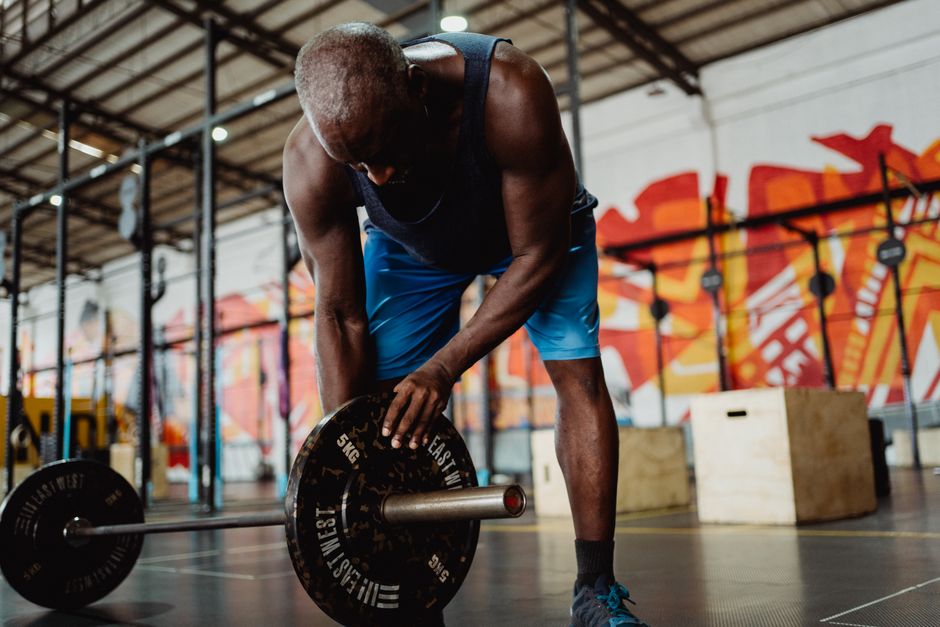
Train twice per week with at least 48 hours between sessions. That schedule is short enough to maintain and frequent enough to practice each movement repeatedly. A beginner who completes eight steady workouts in May will usually gain more than someone who attempts five hard sessions in the first week and then stops.
Keep the first two weeks conservative. Use a weight that allows clean repetitions, stop each set before your form changes, and write down the load, repetitions, and how difficult the final set felt. In week three, add one repetition to selected sets. In week four, add 2.5 to 5 pounds when you can complete the top of the repetition range with stable technique.
Do not turn every workout into a race. Strength improves during the cycle of training, eating, sleeping, and recovering. Aim for seven to nine hours of sleep, eat regular meals with a protein source, and take an easy walk on non-lifting days. If soreness makes stairs difficult for three days, the workout was too hard for your current starting point. The best choice is a repeatable two-day schedule, not a more aggressive plan that interrupts itself.
Session A: the beginner full-body workout
Session A starts with the squat and then moves through a hinge, push, pull, and core exercise. Warm up for five minutes with brisk walking, cycling, or marching in place. Follow that with one easy set of bodyweight squats and hip hinges. The warm-up should prepare you, not drain you.
1. Goblet squat
Hold one dumbbell or kettlebell at chest height. Stand with feet about shoulder-width apart, lower until your thighs are near parallel or your comfortable range, then drive through the whole foot. Perform 3 sets of 8 to 10 repetitions. Use a light load at first. Your knees can travel forward as long as they track in line with your toes and your heels stay grounded.
2. Dumbbell Romanian deadlift
Hold two dumbbells in front of your thighs. Push your hips back while keeping the weights close to your legs, stop when your hamstrings feel tension, and stand by squeezing your glutes. Perform 3 sets of 8 to 10. This is a hip movement, not a deep squat. A rounded back, bouncing weights, or a rushed return to standing are signs to reduce the load.
3. Incline push-up, one-arm row, and dead bug
Place your hands on a stable bench or countertop for 3 sets of 6 to 12 incline push-ups. Lower your chest under control and keep your ribs from flaring. Follow with 3 sets of 8 to 12 one-arm rows per side, pulling your elbow toward your hip. Finish with 2 sets of 6 to 10 dead bugs per side. Rest about 90 seconds after each round. Session A should feel focused, not frantic.
Session B: the second pattern for balanced progress
- Split squat: Complete 3 sets of 6 to 10 repetitions per leg. Hold onto a wall for balance if needed. Keep your front foot planted and lower straight down.
- Glute bridge: Perform 3 sets of 10 to 15 repetitions. Pause for one second at the top and keep your ribs down.
- Standing dumbbell press: Complete 3 sets of 6 to 10 repetitions. Tighten your glutes and abs so you do not lean backward.
- Band pulldown or assisted pull-up: Perform 3 sets of 8 to 12. Pull your elbows toward your ribs instead of swinging your body.
- Farmer carry: Walk for 3 rounds of 20 to 30 seconds while holding equal weights. Stand tall and take short, controlled steps.
Session B complements Session A because it changes the angle and balance demand without abandoning the same basic patterns. The split squat trains one leg at a time. The bridge teaches hip extension with less technical demand than a barbell deadlift. The press adds an overhead push, while the pulldown balances it with a vertical pull.
Use the same progression rule: first improve control, then add repetitions, then add a small amount of weight. If your balance is poor on split squats, hold a lighter dumbbell or use body weight. If your shoulders hurt during presses, switch to a neutral-grip dumbbell press and reduce the range. The clear goal is quality work across all five movements, not a heavier number recorded at any cost.
Which equipment is worth buying for two workouts?
My pick for most home beginners is one pair of adjustable dumbbells and a stable bench. They cover squats, hinges, rows, presses, carries, and many accessory movements without taking over a room. You do not need a power rack or a full commercial gym to make progress during May.
| Product | Useful specification | Approximate price | Best use |
|---|---|---|---|
| Bowflex SelectTech 552 Adjustable Dumbbells | 5 to 52.5 pounds per dumbbell | $429.99 per pair | Small-space full-body training |
| REP Fitness AB-3100 Adjustable Bench | Flat and multiple incline positions | About $319.99 | Presses, rows, and supported exercises |
| Rogue Ohio Bar 2.0 | 45-pound Olympic bar, 28.5 mm shaft | About $305 | Barbell squats and deadlifts after the basics |
| Decathlon Domyos 20 kg Dumbbell Kit | Adjustable plates with a compact setup | Price varies by market | Lower-cost entry-level training |
Prices change, so treat these as buying references rather than fixed quotes. The Bowflex pair is convenient but expensive. The Domyos kit costs less in many markets but takes longer to change between loads. The Rogue bar is excellent equipment, yet it also requires plates, a rack, floor space, and coaching if you are new to barbell lifts. For two beginner sessions, the adjustable dumbbells are the strongest all-around choice if the budget allows. If not, a backpack loaded with books, resistance bands, and bodyweight variations can carry you through the first month.
What mistakes stop beginners from getting stronger?
Do I need to train until failure?
No. Stop with about two repetitions left in reserve for most sets. Training to failure can make recovery harder and often causes form to break down. Save harder efforts for occasional final sets on simple exercises, not every movement.
Should I change the exercises each week?
No. Keep the main exercises for at least four weeks. Repeating a squat, hinge, push, and pull lets you learn technique and see progress. Constant changes make it difficult to tell if you are getting stronger or simply learning a new movement.
When should I reduce the workout?
Reduce the load or stop if you feel sharp pain, numbness, dizziness, or joint pain that worsens with each repetition. Muscle effort and mild next-day soreness are normal; pain that changes your movement is not. Seek medical advice before starting if you have a current injury, uncontrolled blood pressure, or a condition that affects exercise tolerance.
Three other mistakes are easy to fix: skipping the training log, adding weight before earning it, and treating rest as wasted time. Write down every work set. Increase only when your range of motion and control stay consistent. Rest long enough to repeat good technique. The clearest recommendation is to finish May with eight completed sessions, not eight heroic workouts. Start with adjustable dumbbells or simple household resistance, follow Session A and Session B twice each week, and add weight only after your repetitions look the same from the first rep to the last.
Medical Disclaimer: This content is for informational purposes only and does not constitute medical advice. Always consult a qualified healthcare professional before making health-related decisions.