
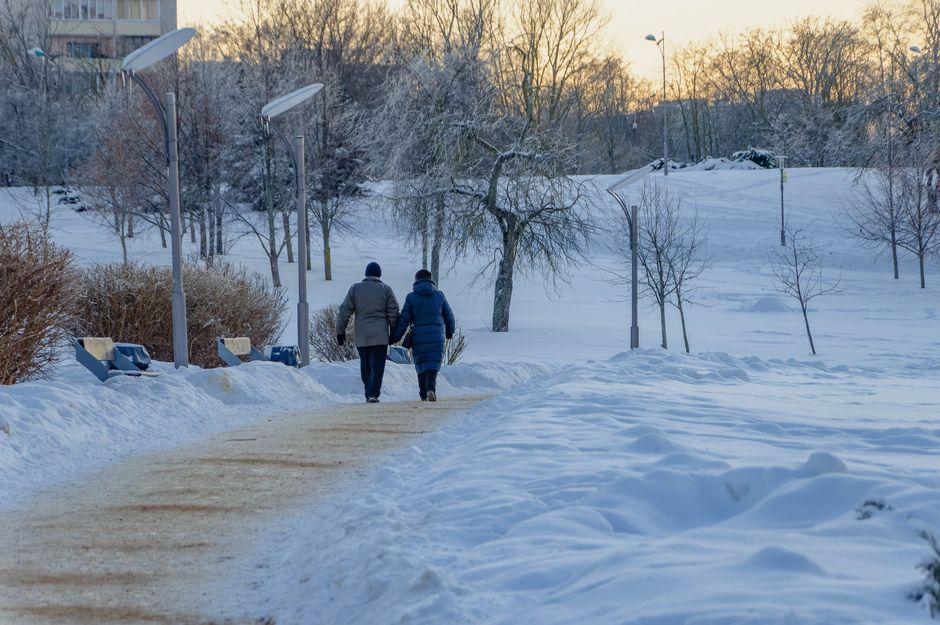
Why a gentle morning walk beats a hard winter workout
Start smaller than your ambition. A 10-minute walk you repeat five mornings a week will help more than a 60-minute winter workout you avoid after the first cold snap. The useful target is not a heroic effort. It is a short, safe dose that feels easy enough to repeat tomorrow.
The real job is reducing morning friction
Cold weather adds decisions before you even leave home: What should you wear? Is the pavement safe? How long will you stay out? A gentle walk solves those problems by setting a low entry point. Put your shoes beside the door, lay out your clothes at night, and choose one familiar route with streetlights and cleared sidewalks. The route should take 10 to 20 minutes, with a nearby indoor option if the weather turns.
Walking also gives you a simple pace test. You should be able to speak in full sentences. If you are breathing hard before your body warms up, slow down. The goal is steady movement, not a training session.
Use a dose that matches the weather
At 35 to 45°F, begin with 15 to 20 minutes. At 20 to 34°F, use 10 to 15 minutes and cover your hands, ears, and neck. Below 20°F, shorten the route, stay close to home, and check wind chill before leaving. The air temperature alone does not tell you how cold exposed skin will feel.
For people with asthma, heart disease, circulation problems, or another condition affected by cold or exertion, ask a clinician for personal limits. Stop for chest pressure, faintness, unusual shortness of breath, confusion, or severe pain. My clear verdict: a short, repeatable walk is the best starting point for building winter consistency because it protects the habit from the weather.
How to start a cold-weather walk habit in seven days

Do not wait for motivation. Set up the same cue, route, and minimum each morning. Your first week should feel almost too easy.
Follow this seven-day ramp
- Day 1: Put on outdoor clothes and walk for 5 minutes. Return before you feel cold.
- Day 2: Walk for 7 minutes at a comfortable pace. Notice which body part gets cold first.
- Day 3: Walk for 10 minutes. Add one gentle hill only if the pavement is dry.
- Day 4: Repeat 10 minutes. Do not increase the distance just because you feel good.
- Day 5: Walk for 12 to 15 minutes. Keep the route close enough for a quick return.
- Day 6: Walk for 15 minutes and practice your full clothing setup.
- Day 7: Pick your normal winter minimum: 10, 15, or 20 minutes. Use that number for the next two weeks.
Attach the walk to one fixed cue
Use the first reliable event after waking, such as turning off your alarm or starting the coffee maker. The sequence should stay short: bathroom, water, clothes, shoes, door. Avoid checking email first. A single message can turn a 15-minute walk into a postponed plan.
Give yourself a backup rule. If ice, unsafe visibility, or dangerous wind cancels the outdoor walk, do 10 minutes of indoor marching, stair walking, or laps in a shopping center. This keeps the cue alive without pretending that every morning is safe.
What to wear for a 20-minute walk below 40°F
Buy gear for the actual problem: staying dry, keeping your footing, and removing the excuse to turn around after three minutes. You do not need a full mountaineering kit for a short neighborhood walk.
Build the outfit from the skin outward
| Layer or tool | What to look for | Specific example and listed price |
|---|---|---|
| Base layer | Close fit, sweat control, no loose cotton | Smartwool Classic Thermal Merino Base Layer Crew, 250 g/m², about $125 |
| Outer shoe | Water resistance, flexible sole, room for winter socks | Merrell Moab Speed 2 GORE-TEX, about $175 full price |
| Traction | Metal grip for packed snow and ice | Yaktrax Diamond Grip, about $59.99 |
| Hands and head | Insulated gloves, hat covering the ears, neck gaiter | Choose fit and warmth over a fashion label |
Wear a thin base layer, a light insulating layer, and a wind-resistant shell. The shell matters most on windy mornings because moving air strips warmth from damp fabric. Start slightly cool. After five minutes of walking, your body should feel comfortable, not sweaty.
Do not overbuy waterproof gear
The Merrell Moab Speed 2 GORE-TEX is the best pick when wet sidewalks, slush, and puddles are common. It is a poor buy for someone who walks only on dry pavement in a mild climate; a lighter, breathable walking shoe will feel less warm and less bulky. The Smartwool 250 layer earns its price for repeated winter use, but a basic synthetic long-sleeve shirt works for occasional 10-minute walks.
Use Yaktrax Diamond Grip only when the surface is icy or packed with snow. Remove traction devices before walking on clean indoor floors or bare pavement. Never treat metal grips as permission to walk fast on black ice. Slow steps and a clear route still matter more than the accessory.
Which tools are worth buying for consistency?

Buy the tool that removes your biggest barrier. A GPS watch will not fix a cold-weather habit if your real problem is missing gloves. A timer can be more useful than a premium tracker because it tells you when the minimum is complete.
Pick one tool, not a full gadget stack
| Barrier | Useful tool | Why it earns a place | Verdict |
|---|---|---|---|
| I stay out too long and dread the walk | Focus Keeper, free on iOS | Set a 10-minute timer and stop when it ends | Best first purchase: free |
| I need route distance and safety features | Garmin Forerunner 165, $249.99 | GPS mode lasts up to 19 hours; smartwatch mode lasts up to 11 days | Best for data-focused walkers |
| I forget the habit after a few days | Paper calendar or phone reminders | A visible mark gives the cue a record | Best low-tech choice |
Use tracking without turning walking into a test
The Garmin Forerunner 165 makes sense if you already enjoy route tracking, heart-rate data, and a bright 1.2-inch AMOLED display. It is excessive for someone who only needs a start-and-stop timer. Set the watch to show elapsed time and distance, then ignore pace for the first two weeks. Faster numbers can make a gentle habit feel like a performance review.
Focus Keeper is the clear winner for a new walker. Set a 10-minute timer, leave the phone in your pocket, and return when it rings. The purchase that matters most is the one you will use on a dark Tuesday morning. For most beginners, that means a timer, warm gloves, and a safe route before a $249.99 watch.
When to walk indoors or skip the outing

Skip the outdoor walk when the route is icy, visibility is poor, wind chill makes exposed skin painful, or you cannot dress warmly enough. A safe 10-minute indoor session is a better choice than forcing a risky route.
Use this morning decision check
- Green light: Dry or cleared pavement, visible route, comfortable layers, and no unusual symptoms. Walk as planned.
- Yellow light: Light snow, moderate wind, or uncertain footing. Cut the route in half, stay near home, and slow down.
- Red light: Glaze ice, severe wind chill, poor visibility, chest symptoms, dizziness, or unsafe conditions. Stay indoors and move gently for 10 minutes.
Indoor walking does not need special equipment. March in place during two songs, walk laps through a hallway, use stairs slowly, or follow a beginner mobility video. Keep the same morning cue and start time so the substitute feels like part of the plan rather than a failure.
Know when cold air is a health warning
Cold, dry air can irritate airways, especially during faster exercise. Cover your mouth and nose with a loose neck gaiter if that feels comfortable, breathe slowly, and avoid pushing through wheezing or chest tightness. People with diagnosed heart or lung conditions should get personal guidance before setting winter exercise limits.
For most health and wellness readers, the best recommendation is simple: choose a 10-minute outdoor walk on safe days, keep a 10-minute indoor backup for bad days, and buy only the gear that solves a real problem. Start with warm hands, stable footwear, and a fixed cue. Let distance grow after the habit has earned its place in your morning.
Medical Disclaimer: This content is for informational purposes only and does not constitute medical advice. Always consult a qualified healthcare professional before making health-related decisions.