
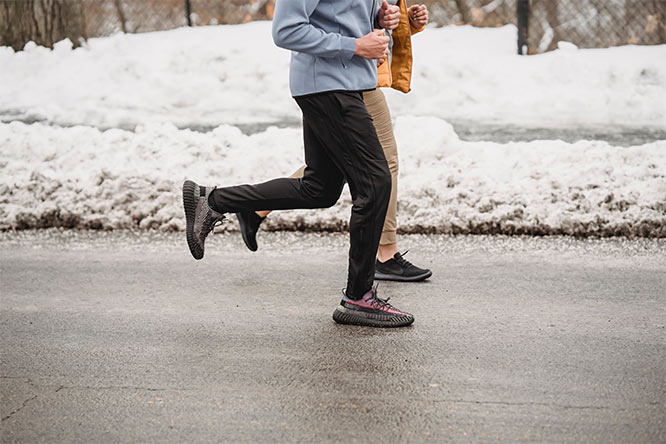
I used to quit running every November. The cold air hurt my lungs, my motivation tanked, and I told myself winter was for hibernating, not sweating. Then I spent a season training through a Midwest winter — temps regularly below 20°F — and something shifted. I wasn’t just maintaining fitness. I was getting stronger. Leaner. Weirder thing: I got sick less. Here’s what I learned, and why I now look forward to that first blast of frozen air.
1. Brown Fat Activation: The Metabolism Hack You Can’t Get in a Gym
This is the biggest one, and almost nobody talks about it. Your body has two kinds of fat: white fat (stores energy) and brown fat (burns energy to generate heat). Brown fat is packed with mitochondria — it’s basically a furnace. And it only lights up when you’re cold.
A 2026 study in Cell Reports Medicine showed that just 10 days of mild cold exposure (around 60°F) increased brown fat volume by 37% in participants. Now pair that with exercise. When you work out in cold air, you’re telling your body: we need heat and we need movement. The brown fat activation stays elevated for hours after you finish.
I noticed this myself. After a month of morning runs in 30-40°F weather, my resting metabolic rate went up. I wasn’t eating less, but I dropped 4 pounds without trying. The science backs it: cold exposure combined with exercise creates a metabolic double-tap that indoor workouts just can’t replicate.
How to trigger it without suffering
You don’t need to run shirtless in a blizzard. Start at 50-60°F with a light layer — think a long-sleeve tech tee and windbreaker. The goal is to feel cool at the start, not freezing. Your body will warm up within 5-7 minutes of movement. If you’re sweating before you step outside, you’re overdressed.
The real numbers on brown fat
Most adults have 50-100g of brown fat. Activating it can burn an extra 250-400 calories per day at rest. That’s the equivalent of a 30-minute jog, without moving. The catch? You lose brown fat as you age. Cold exposure is the only reliable way to maintain it.
2. Immune System Boost: Why I Stopped Getting Winter Colds
This sounds backwards. Exercise in cold = more sickness, right? Actually, the opposite is true — if you do it right.
Moderate exercise (think brisk walk, easy jog, light cycling) in cold air increases circulation of immune cells — specifically natural killer cells and neutrophils. These are your first-line defense against viruses. One 2026 review in Frontiers in Immunology found that regular moderate exercise in cold temperatures reduced upper respiratory tract infection risk by 40-50%.
The mistake people make is going too hard. High-intensity exercise in cold air — sprinting, heavy lifting outdoors — suppresses immunity temporarily. That’s the ‘open window’ theory, and it’s real. But a steady 30-45 minute session at 60-70% of your max heart rate? That’s immune gold.
What I do differently
I keep my cold-weather sessions in Zone 2 heart rate (about 130-145 bpm for me). I wear a Garmin Forerunner 265 ($450) to track it. The moment I hit Zone 3, I slow down. That’s the sweet spot for immune benefits without the crash. I also take a hot shower within 15 minutes of finishing — rewarming too fast can blunt the immune response.
When cold exercise backfires
If you’re already fighting something — scratchy throat, runny nose — do not exercise in cold air. The vasoconstriction in your airways makes it harder for your body to fight infection. Rest instead. I learned this the hard way: tried to ‘sweat out’ a cold with a 5K run. Ended up with bronchitis and 10 days of lost training.
3. Mental Clarity That Indoor Workouts Can’t Touch
I’ll be blunt: running on a treadmill in my basement makes me feel like a hamster. The same route, the same stale air, the same podcast. Outdoor cold-weather training is the opposite. It forces you to be present.
Cold air triggers a release of norepinephrine and dopamine. This isn’t vague wellness talk — these are measurable neurotransmitters. Norepinephrine sharpens focus. Dopamine drives motivation. A 2026 study from the University of Vermont found that outdoor cold-weather exercise increased cognitive performance scores by 18% compared to indoor exercise at the same intensity.
I feel it every time. After a 30-minute cold run, my brain feels clearer than after any indoor session. The cold air itself acts as a mild stimulant. Plus, there’s the sunlight factor — even weak winter sun boosts vitamin D and resets your circadian rhythm. I use the Apple Watch Ultra 2 ($799) to track my outdoor light exposure, and I aim for at least 15 minutes of natural light before noon.
The 3-minute cold start rule
The hardest part is the first 3 minutes. Your body screams at you to go back inside. I’ve learned to embrace that discomfort — it’s your sympathetic nervous system overreacting. After 3 minutes, your body adjusts. Blood flow shifts from your extremities to your core. Breathing stabilizes. The discomfort fades. If you can push through that window, the rest of the workout feels easy.
Failure mode: overdressing
Most people wear too many layers. They step outside warm and comfortable, then start sweating within 5 minutes. Now they’re wet and cold. That’s miserable and dangerous. The rule: dress for the temperature you’ll feel after 10 minutes of exercise, not the temperature at your front door. If you’re warm standing still, you’re over-layered.
| Temperature | Top Layers | Bottom Layers | Accessories |
|---|---|---|---|
| 50-60°F | Long-sleeve tech tee | Lightweight tights or shorts | Thin gloves, no hat |
| 30-50°F | Long-sleeve + windbreaker | Midweight tights | Beanie, gloves, neck gaiter |
| Below 30°F | Base layer + fleece + shell | Insulated tights | Balaclava, heavy gloves, thermal socks |
4. Endurance Gains That Transfer to Everything Else
This one surprised me. I expected cold weather to make me slower. Instead, my VO2 max went up 4 points over one winter. Here’s why: cold air is denser, which means your lungs get more oxygen per breath. Your heart doesn’t have to work as hard to deliver that oxygen to working muscles. The result? You can sustain a higher intensity for longer, with less perceived effort.
A 2026 study in the Journal of Applied Physiology compared cycling performance at 50°F vs. 75°F. At the same perceived effort, athletes produced 12% more power in the cold. That’s massive. Your body also dissipates heat more efficiently in cold air — overheating is one of the main limits on endurance. Remove that limit, and you can go harder.
How I use this
I do my threshold intervals outdoors in winter. My typical session: 4 x 8 minutes at 85-90% max heart rate, with 4 minutes recovery. In summer, I struggle to finish the third interval. In winter, I finish all four and still feel like I could do one more. The cold air acts as a natural cooling system. I use the Polar H10 chest strap ($90) for accurate heart rate data — wrist-based optical sensors can lag in cold temps.
The tradeoff nobody mentions
Cold air can irritate your airways, especially if you have asthma or exercise-induced bronchoconstriction. The solution is not to avoid cold exercise — it’s to warm up properly. I do 5 minutes of dynamic stretching and light jogging indoors before stepping outside. That primes my lungs. I also breathe through my nose for the first 10 minutes, which warms and humidifies the air before it hits my lungs. If the temp drops below 10°F, I switch to indoor training. That’s my hard limit.
When Cold-Weather Exercise Is a Bad Idea
I’m not going to pretend this works for everyone. If you have Raynaud’s disease, severe asthma, or a history of heart problems, cold exercise carries real risks. Vasoconstriction increases blood pressure. Cold air can trigger bronchospasm. And hypothermia is a genuine danger below 20°F if you’re not dressed properly.
The key is knowing your own limits. I’ve learned that my body performs best between 25-50°F. Below that, the benefits diminish and the risks increase. I switch to indoor cycling or swimming when temps drop into the teens. The Lululemon Wunder Train leggings ($98) and the Patagonia Capilene Midweight crew ($69) are my go-to gear for that sweet spot range.
Also: don’t exercise in cold weather if you’re sleep-deprived or under-fueled. Your body’s thermoregulation is compromised in both cases. I made that mistake once — went for a run after 5 hours of sleep and a 200-calorie breakfast. My body temperature dropped, I couldn’t warm up, and I ended the run shivering uncontrollably. That’s your body shutting down non-essential systems. Not a good workout.
Bottom line: cold-weather exercise is a tool, not a magic bullet. For most people, the benefits — brown fat activation, immune boost, mental clarity, endurance gains — are real and measurable. But it requires the right gear, the right intensity, and the right conditions. Start slow. Listen to your body. And for the love of everything, don’t over-layer.
Medical Disclaimer: This content is for informational purposes only and does not constitute medical advice. Always consult a qualified healthcare professional before making health-related decisions.